An introduction to Theon Cross in 10 keywords
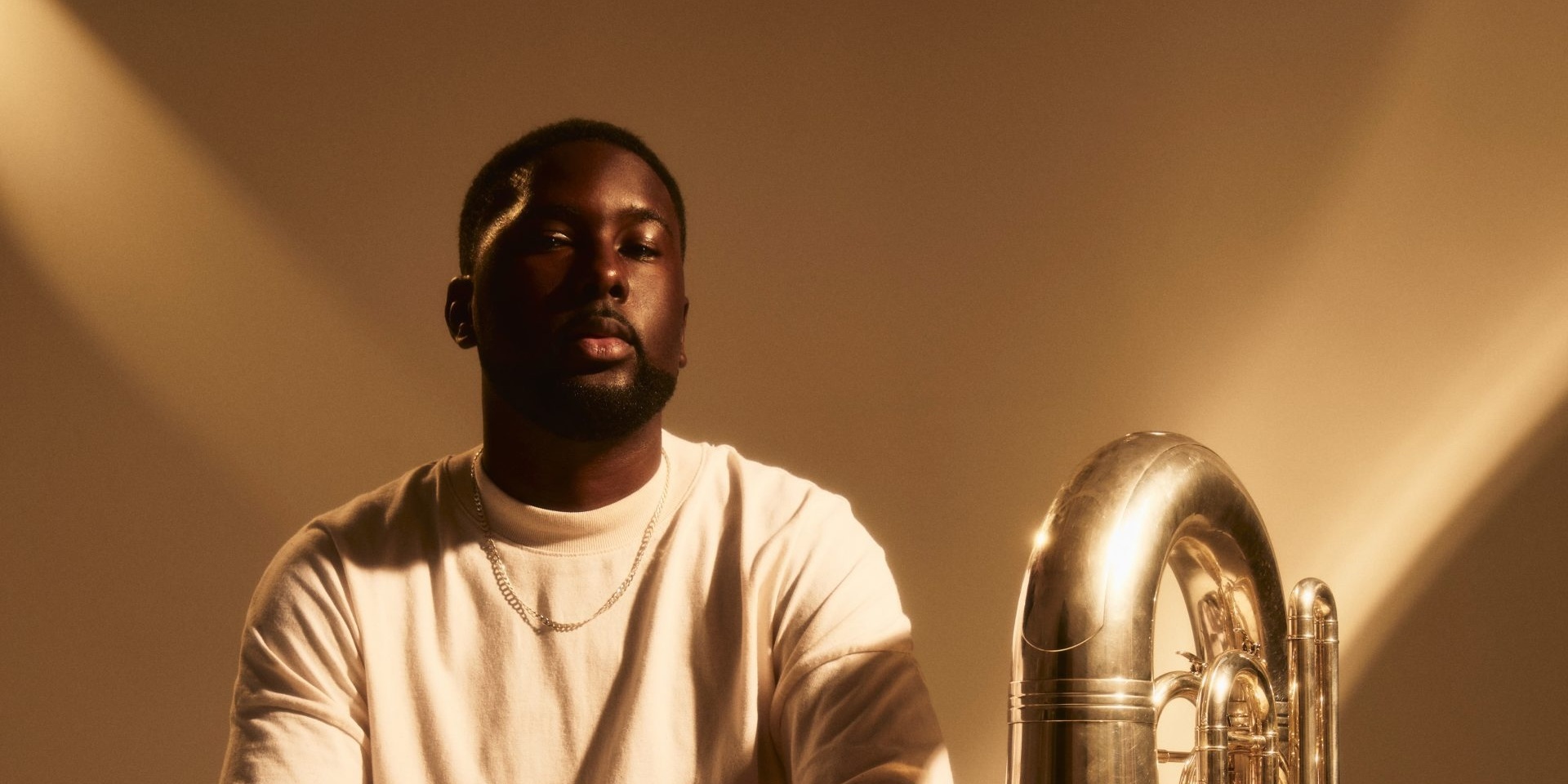
Theon Cross has quietly become one of the defining sounds of contemporary UK jazz. As a core member of Sons of Kemet and a collaborator of artists such as Shabaka Hutchings, Nubya Garcia and Makaya McCraven, he helped shape a generation of music that moves naturally between jazz, dub, grime, hip-hop and Afro-Caribbean rhythms. At the centre of it all is the tuba: an instrument he transformed into something powerful, physical and unexpectedly versatile.
Across his solo work and collaborations, Cross treats bass not simply as support, but as movement, atmosphere and pulse. His sound can feel meditative one moment and overwhelming the next, drawing as much from Jamaican sound systems and funk grooves as from jazz improvisation. To get closer to his musical world before he arrives at Jazz Middelheim 2026 on Monday May 25, we selected 10 keywords that help map out the many layers of his music.
1. Tuba (“My Queen is Angela Davis” - Sons of Kemet, 2018)
The tuba rarely takes centre stage in contemporary jazz. Theon Cross changed that. Rather than treating the instrument as background support, he turned it into something physical and driving. His sound can feel like a bassline, a rhythm section and a melodic voice all at once. Deep, heavy and surprisingly agile, his playing pushed the tuba far beyond its traditional role and opened up new possibilities for the instrument within modern jazz.
2. Afro-Caribbean (“Candance of Meroe” - Fyah, 2019)
Cross grew up in London with Caribbean roots, and those rhythms continue to shape his music. Before fully entering the jazz world, he played in Brazilian street bands as a teenager. You can still hear traces of those early influences throughout his work: layered percussion, circular grooves and a strong sense of movement. His music often feels connected to a wider Afro-diasporic tradition where rhythm carries both memory and momentum.
3. UK (“My Queen is Albertina Sisulu” - Sons of Kemet, 2018)
Since the mid-2010s, Cross has become one of the defining voices of the London jazz resurgence. Alongside artists such as Shabaka Hutchings, Nubya Garcia and Makaya McCraven, he helped shape a sound where jazz meets dub, grime, hip-hop and electronic music. His playing became a crucial part of the identity of Sons of Kemet, a group that redefined what contemporary British jazz could sound like.
4. Funk (“CIYA” - Fyah, 2019)
Groove sits at the centre of much of Cross’ music. Even at its heaviest, there is usually something lean and rhythmic underneath. His basslines often carry the elasticity of funk music, less about virtuosity than about propulsion. The result is music that moves naturally between jazz improvisation and the physical pull of dance-oriented rhythm.
5. Electronics (“Offerings” - Fyah, 2019)
Cross regularly processes and reshapes the sound of his tuba through electronics. Sometimes the instrument barely resembles a brass instrument at all, drifting closer to the weight and texture of dub bass. He once described his setup as “a sound system powered by breath”. That phrase captures something essential about his work: acoustic music transformed into something immersive, physical and almost architectural.
6. Hip-Hop (“Roots” - Intra-I, 2021)
The heavy low-end presence in Cross’ music naturally connects with hip-hop production. His playing often feels closer to sub-bass than to traditional jazz accompaniment. On tracks like “Roots”, the tuba becomes dense and forceful, creating a rhythmic pressure that pulls from both jazz improvisation and urban sound culture.
7. Dub (“Forward Progression II” - Intra-I, 2021)
Dub runs deep through Cross’ work. The repetitive pulse, the spacious low frequencies and the hypnotic build-ups all echo Jamaican sound system culture. At times, his music feels less like a conventional jazz ensemble and more like a live acoustic dub session. Reggae, ska and rocksteady are never far away, even when they remain beneath the surface.
8. Meditative (“Universal Alignment” - Intra-I, 2021)
Not every piece revolves around impact. Some unfold slowly and almost ritualistically. The repetitive motion of Cross’ bass patterns often creates a trance-like effect, rooted in African rhythmic traditions and ambient textures alike. On “Universal Alignment”, the tuba becomes something deeply atmospheric, producing long organic tones that feel closer to drone or soundscape than to conventional jazz structure.
9. Engaged (“Black” - Sons of Kemet, 2021)
Like many artists within the London scene around him, Cross’ work often carries a social dimension. Questions around identity, history and the experience of Black communities in London regularly appear beneath the surface of the music. Not through slogans, but through intention, collaboration and the worlds his music chooses to draw from.
10. Live energy (“Radiation” - Affirmation: Live at the Blue Note New York, 2025)
Theon Cross is ultimately an artist best experienced live. His performances are intense, physical and collective. Whether leading his own group or collaborating with others, he builds momentum patiently until the entire room seems locked into the same pulse. Recent live recordings, including collaborations with Isaiah Collier, capture that energy clearly: music as shared movement, built from rhythm, repetition and breath.
On Monday May 25, Theon Cross will play our Birdland Stage, alongside Cassie Kinoshi's seed., The Herbaliser Band and The Buena Vista Orchestra.